

At its Ordinary Council meeting on 16 June 2026, Council endorsed the Climate Action Plan 2026–2030, our roadmap to achieving net zero emissions from CN's operations by 2030, and supporting the transition of the Newcastle Local Government Area to net zero emissions by 2040.


What Council decided

Council voted to endorse the plan via an amended motion. You can view the full decision, including the business papers and minutes, at the Council Meetings webpage.


How your feedback shaped the plan

Between 4 February and 4 March 2026, we received 239 submissions, including:

86% of respondents were from within the Newcastle LGA, with responses from across all four wards.

Our reach included 67,923 social media impressions, e-newsletters to 6,018 recipients, a community workshop, and four pop-up stalls.

Read the Engagement and Public Exhibition Report for a complete account of every theme raised and CN's response.

What you told us and how the plan was changed

We heard broad support for the Plan, with 63% of survey respondents supporting the targets and actions.

Here is a summary of the most significant themes raised, and the changes made to the final plan in response:

What we heard:

Concern about the financial impact on ratepayers and calls for greater transparency around costs, savings and how actions align with Council's long-term financial planning.

What changed:
A new adaptable delivery section has been added, committing CN to business cases for major capital initiatives, options assessments, and regular review of emission reduction pathways to ensure cost-effective delivery.

What we heard:

Strong calls for greater specificity, clearer timelines, defined responsibilities, and stronger accountability mechanisms to track progress.

What changed:
The 'working together' section has been substantially updated because we heard from the feedback that while CN has a custodial role in delivering CAP 2030, it is not solely responsible for its implementation, and that many of the 77 actions in CAP 2030 are beyond the direct control and influence of local government.

The 77 actions in CAP 2030 have therefore been categorised as 'deliver', 'partner', 'advocate' and a new role of 'enable'. This shows that other various stakeholders and partners are also responsible for delivering CAP 2030, including other levels of government and their affiliated agencies, local businesses and industry, educational institutions, community groups, and other service providers.

For tracking progress, CAP 2030 was updated to clarify that targets and indicators, as well as progress on actions in CAP 2030 will be reported in CN's Annual Report.

What we heard:

Equity concerns that renters, apartment dwellers, low-income households, and vulnerable groups risk being left behind in the energy transition.

What changed:
While the CAP 2030 has a strong focus on community energy equity, it has been updated to clarify that programs that deliver both emissions reductions and affordability benefits will be prioritised.

What we heard:

A desire to see more climate action related to active and public transport initiatives.

What changed:
The plan now explicitly acknowledges that active and public transport is addressed through complementary strategies, including the Newcastle Transport Strategy, Cycling Plan, and Walking and Mobility Plan.

What we heard:

Community desire for the plan to connect climate action to quality-of-life, mental wellbeing, social connection, and a fair transition, not just emissions reduction.

What changed:
The Flourishing Lives for All (FL4ALL) framework has been improved, with human needs indicators added against the priority areas. New content on mental wellbeing, community resilience, and Newcastle's potential as a global transition solution provider has been added.

What we heard:

Requests for more information on the Astra Street Community Energy Precinct, including costs, technology risks, and how the project will proceed.

What changed:
A commitment to a comprehensive feasibility study and business case has been added to the Astra Street project description, along with a commitment to further community consultation as the project progresses.

What we heard but didn’t change, and why

Some feedback asked us to go further or take a different direction or approach.

Where we haven't made changes, we've explained why in the Public Exhibition Report. This includes:

  • Climate science scepticism: In 2019, Council formally declared a climate emergency. CAP 2030 reflects that adopted position.
  • Requests for modal share targets and funding for active transport: These are addressed through separate, dedicated strategies.
  • Calls for more ambitious targets: CAP 2030 is aligned to CN's adopted policy position and includes science-based targets consistent with the Paris Agreement. The 100% electricity emissions reduction target by 2030 is derived from IPCC modelling.

What happens next?

Delivery of the plan's 77 actions begins now. Progress will be reported annually in CN's Annual Report.

Stay informed and get involved through our Empowering Newcastle program.


Mission Possible: Our five-year plan towards a net zero Newcastle

We’ve heard you loud and clear – you want meaningful climate action and a sustainable Newcastle.

The draft Climate Action Plan 2030 (CAP 2030) is our 5-year roadmap to achieve net zero emissions from City of Newcastle's operations by 2030 and to support a Newcastle-wide transition to net zero by 2040.

It outlines the actions we will take to reduce the impacts of climate change, recognising that cutting emissions also improves our quality of life, supports equity, strengthens our local economy and builds a more resilient city.

The CAP 2030 is informed by extensive community consultation, economic modelling, best-practice research, and cost-benefit analyses.

Where we've been

Newcastle's climate leadership

City of Newcastle has a long history of climate action, and we’ve established ourselves as a leader in sustainability and innovation. We were the first council in NSW to be powered by 100% renewable electricity and have designed and delivered multiple projects that have reduced costs, lowered emissions, and strengthened community resilience.

Scroll below to see some of our key initiatives.

Where we're going

Science-based targets

While we have already achieved a lot, we know there’s more work to do, and our community has told us they want to see bold climate action.

If we are to significantly reduce the risks and impacts of climate change, it is imperative that we limit global average temperatures to 1.5°C above pre-industrial levels, in accordance with the Paris Agreement.

According to the Intergovernmental Panel on Climate Change (IPCC), to have a good chance of staying within 1.5°C, the world needs to reach net zero emissions by around 2040. This means we need to make rapid and deep cuts to emissions right now, across all sectors, starting this decade.

Acting quickly matters because every delay increases the risk of overshooting 1.5°C of warming. If we overshoot this target, even temporarily, it triggers dangerous consequences like more bushfires, dying forests, and thawing permafrost. These events release even more greenhouse gases, making it much harder to get temperatures back down to safe levels.

The CAP2030 targets reflect this urgency and align with the IPCC 1.5°C net zero pathways.

Click below to see our targets.

  • Net zero emissions by 2040
  • 100% reduction in city-wide greenhouse gas emissions from electricity by 2030
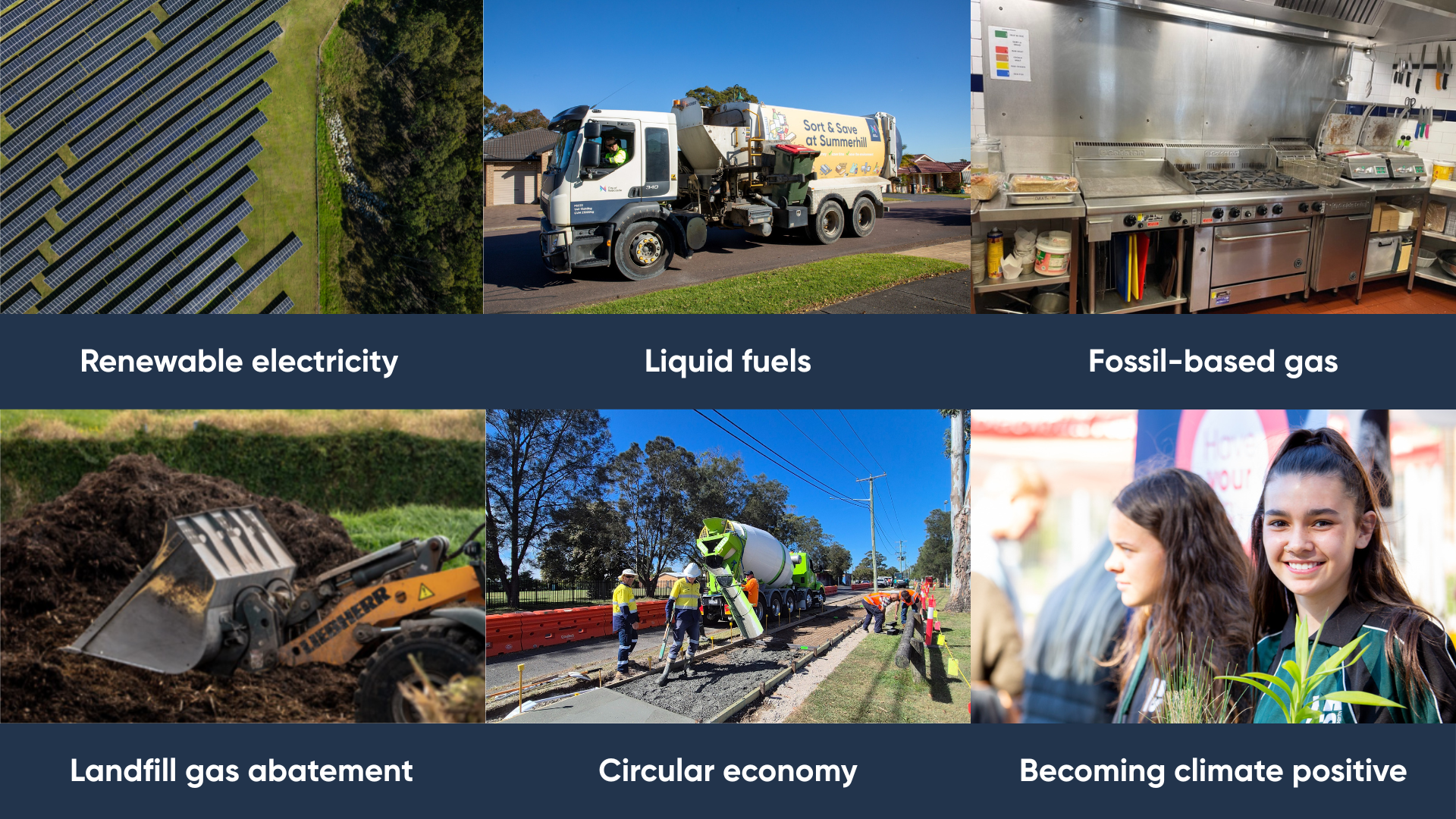
  • Net zero emissions from CN operations by 2030 (from electricity, liquid fuels, fossil-based gas and LPG, water and wastewater, and office paper)
  • Net zero emissions from landfill gas by 2040
  • Reduce operational Scope 3 emissions by 2030
  • Move beyond net zero emissions to become climate positive post 2040

How we'll get there

Climate action isn’t just about emissions and technology, it’s about shifting social norms, redesigning economic systems, and embedding equity and wellbeing into climate solutions.

CAP 2030 takes a holistic approach to climate action by addressing these deeper layers.

The 77 actions listed in the CAP 2030 are presented through the four pillars of Newcastle 2040 – Liveable, Sustainable, Creative and Achieving Together, so that we embed climate action across every area of our operations and service delivery.

This holistic approach to climate action aligns with Mission Innovation's 'Flourishing Lives 4 All' initiative in which climate action focuses on a positive vision for the future and what we need more of, rather than focusing on what we need less of. It is a vision where people live flourishing lives on a flourishing planet.


Towards a net zero Newcastle by 2040

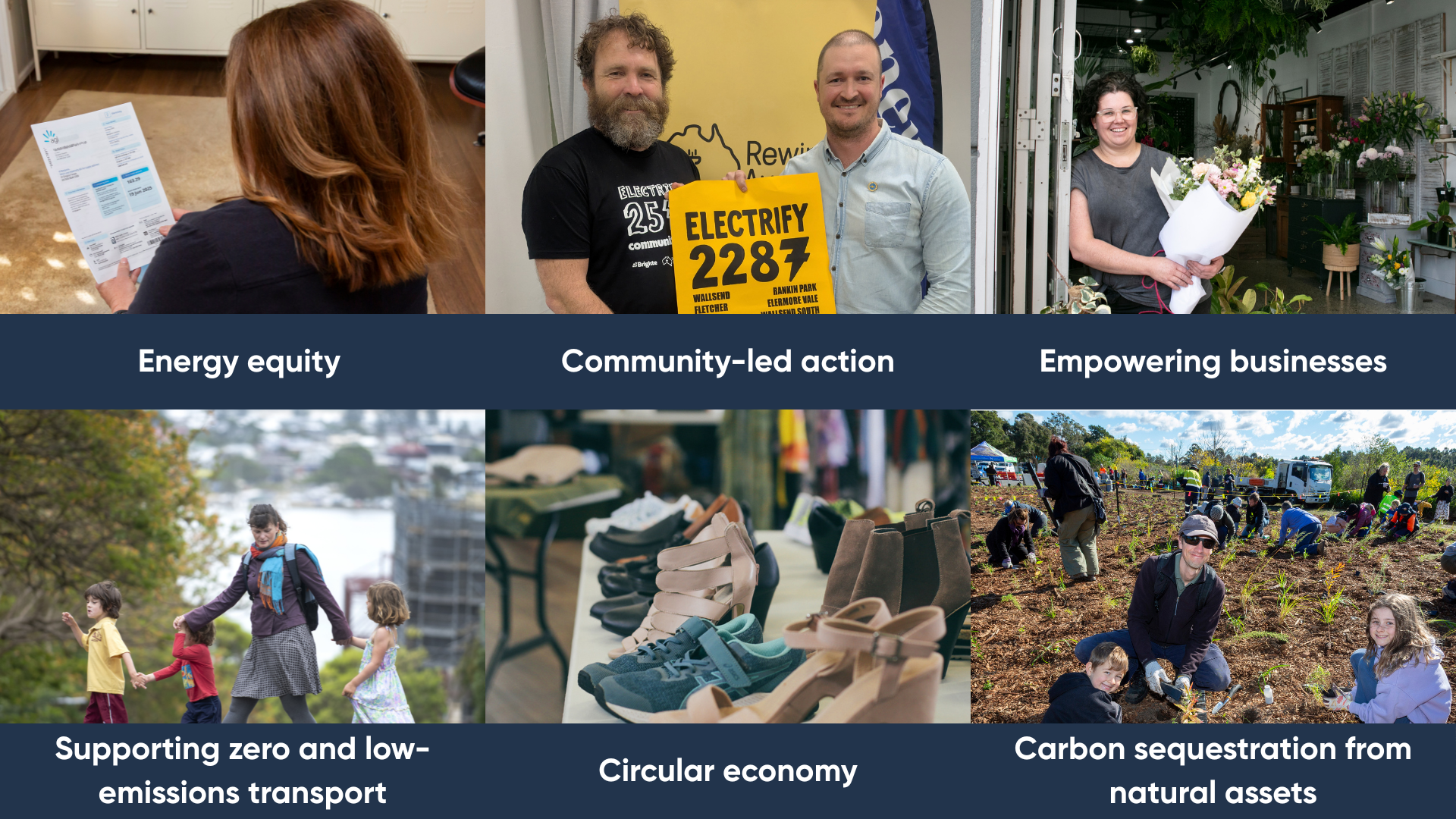
Empowering Newcastle is our flagship community program to progress a net zero Newcastle by 2040.

Our expanded Empowering Newcastle program will focus on six strategic opportunities.

Click below to learn more about them.


Towards net zero emissions from City of Newcastle operations by 2030

Six key strategic opportunities exist for City of Newcastle to achieve net zero emissions from our own operations by 2030.

Click below to learn more about them.

A sustainable funding model

The actions in CAP 2030 have been designed to establish a defined and achieveable pathway to achieving our net zero targets.

CAP 2030 contains a sustainable funding model to ensure we can deliver our commitments while maintaining the services our community relies on. It has been developed through extensive community consultation, economic modelling and cost-benefit analyses to ensure it’s both ambitious and achievable.

Highlight projects

  • Astra Street Community Energy Precinct

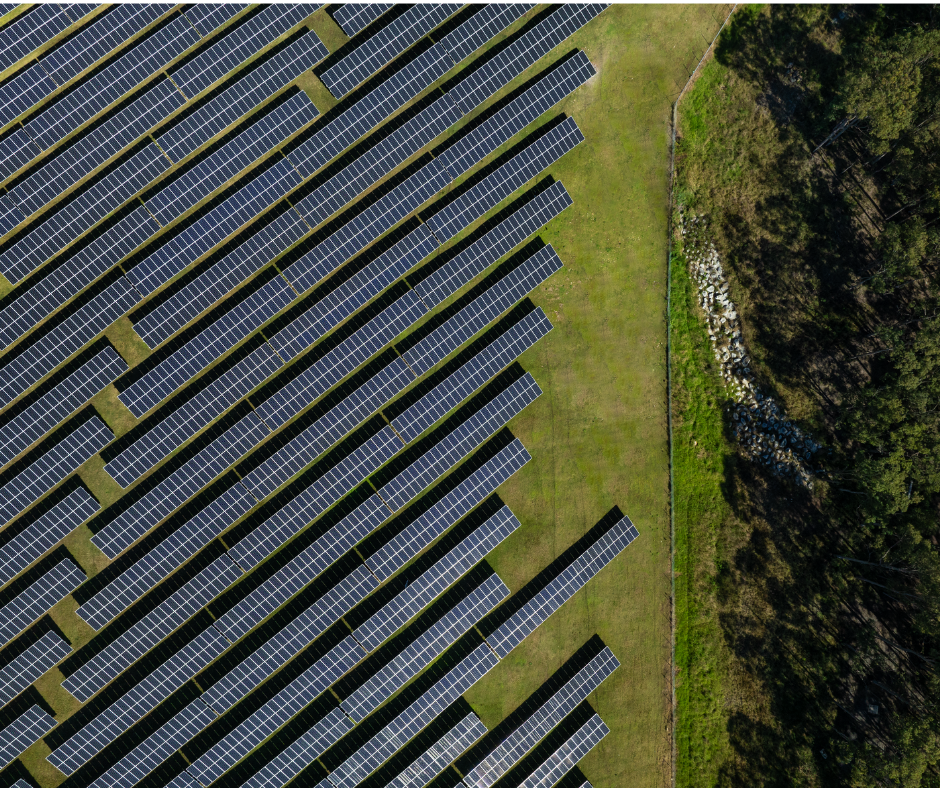
    We will explore an opportunity to transform a section of the capped landfill site at Astra Street, Sandgate into a large-scale solar farm, battery hub and heavy electric vehicle charging facility.

    We will look at ways the precinct could benefit the community through a renewable energy sharing scheme. The project could help power a cleaner, fairer energy future for Newcastle.

    Further community consultation will take place before this project proceeds.

  • Energy for All Program

    It’s important that everyone in our community can access affordable and reliable renewable energy.

    Our Energy for All program will empower people who rent, apartment residents, low-income households and culturally and linguistically diverse communities to lower their energy bills and improve comfort and wellbeing through guidance on how to improve household thermal comfort, personalised energy bill checks, and support to access rebates.

  • Go electric Newcastle

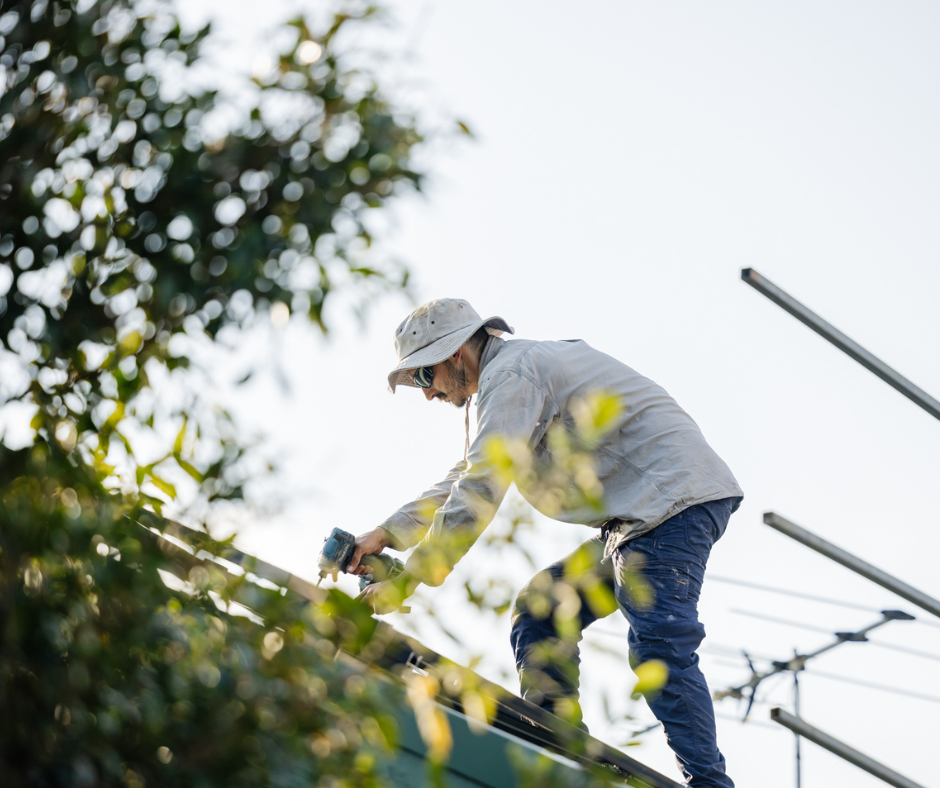
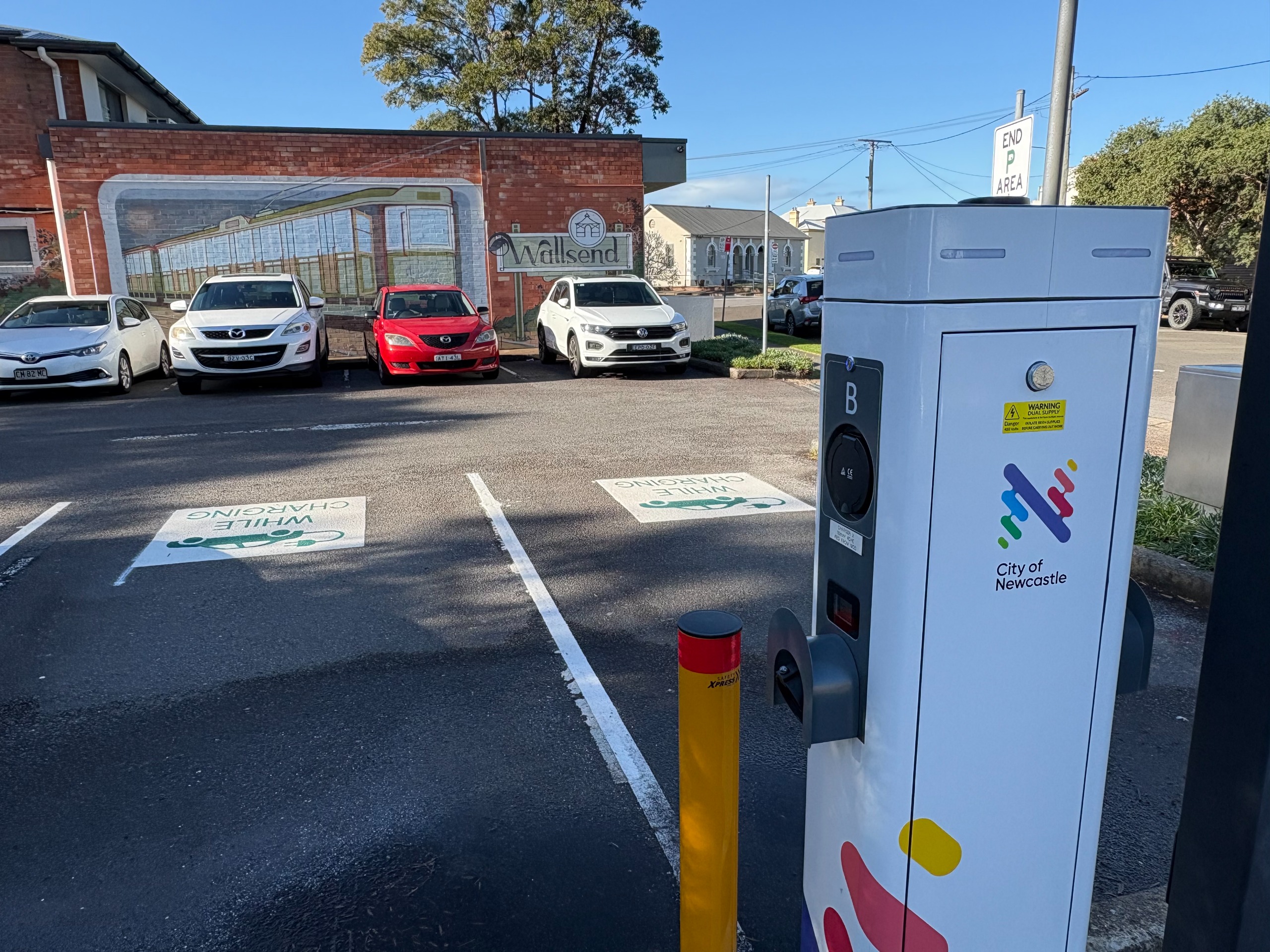
    The expanded Empowering Newcastle program will offer a free ‘go electric’ service, providing independent, tailored advice to households, apartment buildings, and businesses on electrification options. This includes guidance on efficient appliances, solar and batteries, EV chargers, home efficiency upgrades, and switching to cheaper, greener electricity plans, along with support to connect with trusted local installers.

  • Empowering Newcastle business program

    The Empowering Newcastle business program will offer practical guidance through energy audits, carbon accounting, renewable energy uptake, EV transition, and circular economy initiatives, delivered via workshops, tailored advice, case studies, and partnerships with industry and energy experts, to assist Newcastle businesses to transition to net zero.


How you could have had your say

The draft Climate Action Plan 2030 was on public exhibition between 4 February and 4 March 2026.

You could have provided feedback by:

  • Completing our online survey
  • Participating in our quick poll
  • Sharing your vision for what a net zero Newcastle looks and feels like
  • Joining us to learn more at our community workshop
  • Visiting our pop-up information stalls

All feedback received during the exhibition period is now being considered and will inform the final Climate Action Plan 2030.

Subscribe to Newcastle Connect

Sign up for the latest news! Newcastle Connect is the e-newsletter keeping you informed & involved in shaping our vibrant city.